Is the Revi Karunakaran Museum worth a short visit in Alleppey town?
Yes—if you enjoy decorative art, private collections or Alappuzha’s coir-era history and can give the museum roughly an hour or more. It is a practical indoor stop within Alappuzha town, but not a substitute for a backwater trip or a quick five-minute photo attraction. Confirm the opening window and ticket price before leaving because current official tourism pages disagree on the closing time.
The Revi Karunakaran Memorial Museum is a privately owned museum created by Betty Karan in memory of Revi Karunakaran, a prominent figure in Kerala’s coir industry. Kerala Tourism describes a family collection built across three generations, including Swarovski crystal, porcelain, ivory, Tanjore paintings, sculptures and a Kerala Room.
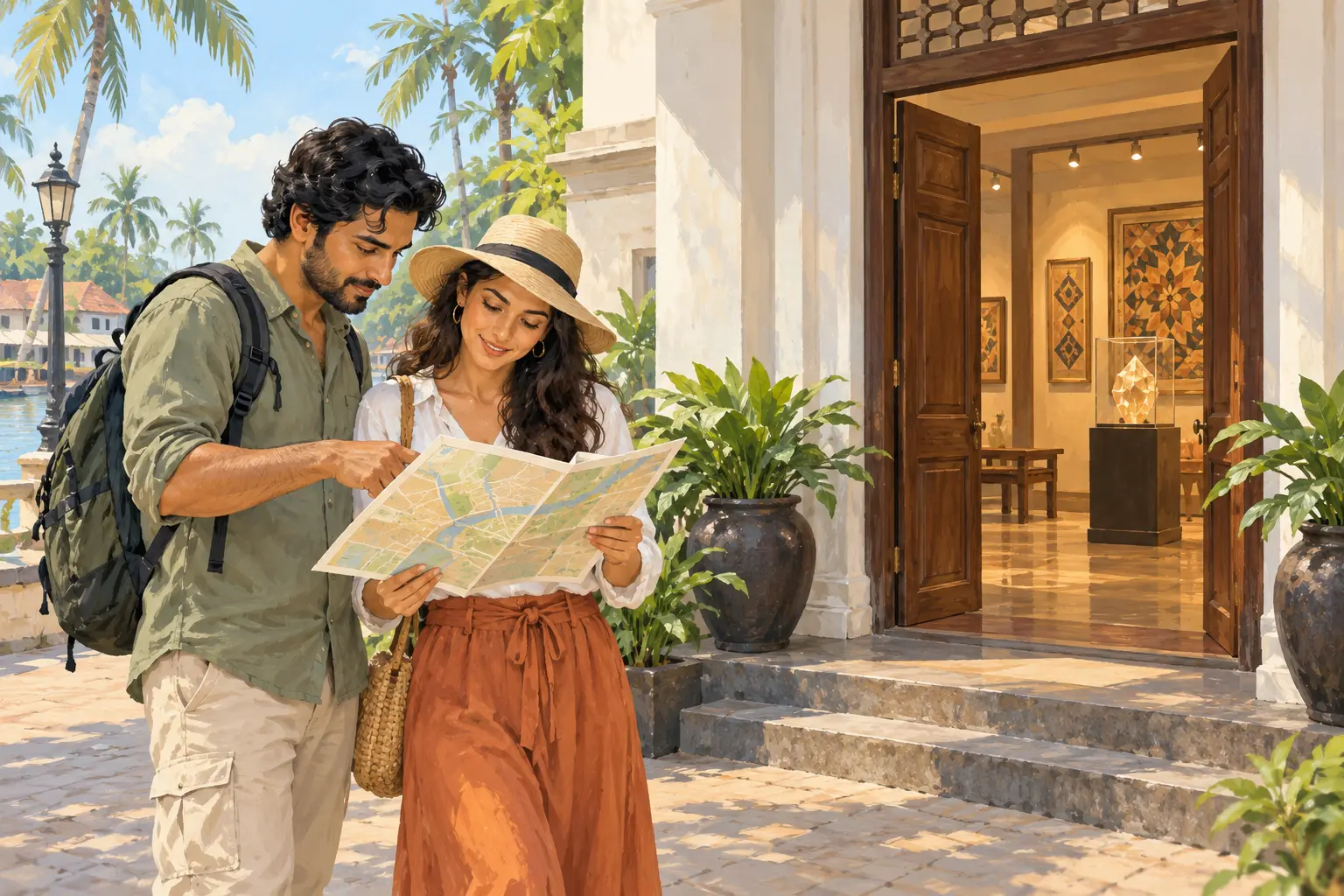
Who will enjoy the museum?
The museum is most worthwhile for travellers interested in collecting, decorative arts, architecture or the history of a family closely connected with Alappuzha’s coir business. Kerala Tourism highlights the building’s classical architectural elements, a Kerala Room with carved wood and tiled details, and displays representing Buddhism, Christianity, Hinduism and Islam.
Choose it when:
- you want an indoor cultural stop during the hottest or wettest part of the day;
- your Alleppey plan already includes the town, beach or railway-station side;
- you enjoy viewing art objects slowly rather than collecting attraction photos; or
- you want context for the business and cultural history behind the local coir industry.
Skip it when you have only enough time for one main Alleppey experience and the backwaters are your priority. It is also a poor fit between a fixed houseboat report and a train unless the museum has confirmed that your available window is sufficient.
What is inside?
This is an eclectic family collection rather than a chronological state-history museum. The strongest official descriptions identify:
- Swarovski crystal pieces;
- porcelain and decorative objects;
- ivory carvings and sculptures;
- Tanjore paintings;
- a large mural made with vegetable dyes;
- the Kerala Room; and
- religious art and symbols associated with four major faiths.
Visit for the collection and the story behind it, not for a conventional account of every period of Alappuzha history. If your main interest is how coir fibre is processed and made into products, use the separate guide to where to learn about coir making near Alleppey.
How much time should you allow?
Allow about sixty to ninety minutes for a first visit, plus ticketing and transport. That is editorial planning advice, not an official timed route. Move more slowly if you read labels closely or want to study the paintings, crystal and Kerala Room.
Do not arrive close to the published closing time. Last admission may be earlier, and the official sources checked do not state a dependable last-entry policy. Call first if your schedule is tight.
What are the current hours and ticket prices?
The official listings are not fully consistent:
| Source checked 7 October 2026 | Published information |
|---|---|
| DTPC Alappuzha | 9:00 a.m.–5:00 p.m.; Monday holiday; adults ₹200 and children ₹100. |
| Incredible India | 9:00 a.m.–2:00 p.m.; closed Mondays and national holidays. |
Because these government tourism pages conflict, do not plan around the later closing time without confirmation. DTPC Alappuzha lists the museum office number as 0477 224 2923. Ask for the opening window, last admission, current ticket, holiday closure and accepted payment method for your date.
Where is it, and how does it fit a town day?
DTPC places the museum in Alappuzha town and lists Alappuzha railway station and bus stand as the relevant arrival points. Your actual journey depends on your hotel, traffic and the correct museum pin, so use a current map and agree on the fare before taking an auto-rickshaw or taxi.
A sensible sequence is:
- Visit the museum during a confirmed opening window.
- Take a break for food or shade in town.
- Continue to the lighthouse and Alleppey Beach only when access, weather and your return plan fit.
For a central religious and shopping-area stop, Mullakkal Temple answers a different town-visit question. Do not force both stops into a short gap merely because they are in the wider town area.
What should you check about photography and access?
The official tourism sources checked do not provide a dependable current photography policy. Ask at the ticket counter before taking any photograph or video, and follow staff instructions around sensitive or fragile objects.
Likewise, do not assume step-free access throughout the building. Travellers who need a level entrance, accessible toilet, seating, wheelchair circulation or a close vehicle drop-off should call the museum before travelling and describe the exact requirement.
Practical checklist
- Call on the day or shortly before to confirm hours, last admission and ticket price.
- Save the exact museum pin rather than relying only on the attraction name.
- Allow an hour or more inside, plus transport and ticketing.
- Ask before photographing any gallery or object.
- Keep large bags, food and drinks out of exhibit areas unless staff permits them.
- Verify accessibility needs before leaving.
- Keep a generous buffer before any train, boat or airport transfer.
Need help fitting the museum into a town, beach and backwater itinerary? Share your dates and starting point with Alleppey.Life. Enquiries remain with Alleppey.Life.
Frequently asked questions
Is the Revi Karunakaran Museum a coir museum?
No. It is a private memorial museum with a wide decorative-art and family collection. Revi Karunakaran’s connection to the coir industry is part of its context, but visitors looking specifically for coir production should use the International Coir Museum guide.
Is it close enough for a short Alleppey town visit?
Yes, when your schedule already includes central Alappuzha and you have confirmed the opening window. It is not a safe addition to a very tight train or houseboat connection.
Is the museum open on Monday?
Both government tourism listings checked identify Monday as a closure day. Reconfirm around national holidays and special closures.
What is the entry fee?
DTPC Alappuzha currently lists ₹200 for adults and ₹100 for children. Treat these as check-before-you-go figures because the museum’s own working website could not be verified and prices can change.
Can you take photographs inside?
Do not assume so. The official tourism sources checked do not publish a reliable current photography rule; ask at the counter and follow staff instructions.
Sources and freshness
Checked 7 October 2026. Kerala Tourism was used for the museum’s history, architecture and collection. DTPC Alappuzha was used for the local office contact, location, ticket and hours listing. Incredible India was used to identify the conflicting shorter closing time and national-holiday caution. The museum’s previously published website could not be retrieved, so volatile details are clearly marked for direct confirmation.