
Called the Venice of the East for its canal-laced geography, Alleppey gets reduced to houseboats so often that most travellers miss the layers underneath: a 1,500 km backwater network spanning three distinct zones, six beaches with genuinely different characters, temples older than most European cathedrals, a palace with the largest mural painting in Kerala, and village waterways that see no tourist boats at all. This guide covers every significant place to see in Alappuzha — organised by type, with distances, practical details, and the context to help you decide what’s actually worth your time.
Quick Answer: What are the best places to visit in Alleppey?
- The backwaters cover three distinct zones — Punnamada Lake, Vembanad Lake, and Kuttanad — and each delivers a different experience; knowing which one you’re on matters
- Most town-based attractions (beach, lighthouse, temples, floating market) are accessible without booking a houseboat
- Pathiramanal Island, Champakkulam, and Karumadi Kuttan are the most underrated places to visit — none appear prominently on standard tour itineraries
- The best sightseeing season is November to February: dry weather, migratory birds at Pathiramanal, and clear backwater visibility
- Plan for at least two full days — one on the water, one for the town and its surrounding temples and beaches
At a Glance: Key Places in Alleppey
| Place | Distance from Town | Best For | Time Needed |
|---|---|---|---|
| Alleppey Backwaters | Town canals: 0 km | Everyone | Half day to overnight |
| Punnamada Lake | 2 km | Boat race, island access | 2–3 hours |
| Pathiramanal Island | ~13 km by water | Birdwatchers | 2–3 hours |
| Alappuzha Beach + Lighthouse | 4 km | Sunsets, heritage | 2 hours |
| Marari Beach | 11 km | Quiet beach, Ayurveda | Half day |
| Thottappally Beach | 28 km | Photography, unique landscape | 2 hours |
| Krishnapuram Palace | ~35 km | Heritage, art | Half day |
| Ambalapuzha Sri Krishna Temple | 14 km | Spirituality, Palpayasam | 1–2 hours |
| Mannarasala Temple | ~32 km | Unique temple experience | 2 hours |
| Arthunkal St. Andrew’s Basilica | 23 km | Pilgrimage, coastal setting | 1–2 hours |
| Nehru Trophy Boat Race | Punnamada Lake | Seasonal (August) | Full day |
| Kuttanad | 20–30 km | Rural backwaters, rice fields | Half to full day |
The Alleppey Backwaters
The Alleppey backwaters are the largest navigable network of inland waterways in India — over 1,500 km of rivers, canals, and lakes woven through paddy fields, coconut groves, and fishing villages that have barely changed in centuries. What makes them unlike any other destination in the country is the combination of scale, accessibility, and living geography: you don’t observe village life here from a viewpoint, you travel through the middle of it.
The network divides into three meaningful zones, each with a different character. The town canals of Alappuzha connect directly to Punnamada Lake, the houseboat hub and race venue. Punnamada opens south into the vast Vembanad Lake — India’s longest lake at roughly 96 km — which stretches toward Kumarakom and holds Pathiramanal Island. Further south, the landscape descends below sea level into Kuttanad, a region of flooded paddy fields and narrow village waterways that feels entirely separate from the tourist circuit of Alleppey town.
How you experience the backwaters depends on the vessel. A Kettuvallam — the traditional houseboat, built from bamboo and coir rope, now fitted with bedrooms and a kitchen — is the overnight option, ideal for Vembanad and Punnamada. A shikara, the smaller open wooden canoe-style boat, covers the same waters at a fraction of the cost and gets you closer to the surface. For the narrowest village canals — channels too tight for houseboats — a country boat or canoe is the only way in. The site has a dedicated houseboat booking page for Kettuvallam, shikara, and canoe options.
Punnamada Lake
Punnamada Lake — Punnamada Kayal in Malayalam, meaning the backwater lake of Punnamada — is the beating heart of Alleppey’s water world. It sits at the northern edge of Vembanad, about 2 km from the town centre, and this is where every major water event happens. The Nehru Trophy Boat Race takes place here every August. Pathiramanal Island is visible from its southern shore. Pallippuram and Perumbalam, two tiny inhabited islands, sit in the lake itself — visible from passing houseboats and accessible by small ferry.
The lake is where most overnight houseboats anchor for the night, with the eastern shore lined with Kettuvallams after dark, their lanterns reflecting on still water. In the early morning, before the boats move, Punnamada is worth visiting simply for the quiet.
Kuttanad — Kerala’s Below-Sea-Level Backwaters
Kuttanad is the only place in India where farming happens below sea level — paddy fields cultivated in flooded land enclosed by earthen bunds, harvested by boat. The name translates roughly to “the low-lying land,” and it sits at minus 2 metres in places, making it one of the few below-sea-level farming regions in Asia alongside the Netherlands. The “rice bowl of Kerala” label is accurate: these fields feed a large part of the state.
For travellers, Kuttanad is most meaningfully experienced from the water. The narrow canals between paddy bunds are too tight for houseboats but perfectly scaled for shikaras and canoes — and on a slow boat through Kuttanad in the early morning, you’ll pass schoolchildren rowing to class, fishermen setting nets, and women washing at the canal edge, with no other tourists visible. Champakkulam is the main gateway village, 14 km from Alleppey town, accessible by road or public ferry. It holds Kerala’s oldest snake boat race — older than the Nehru Trophy — held on the Moolam day of Karkidakam (late July). The Champakkulam Vallam Kali begins at St. Mary’s Forane Church, which itself is traditionally dated to 427 AD, making it one of the oldest churches in India.
Pathiramanal Island
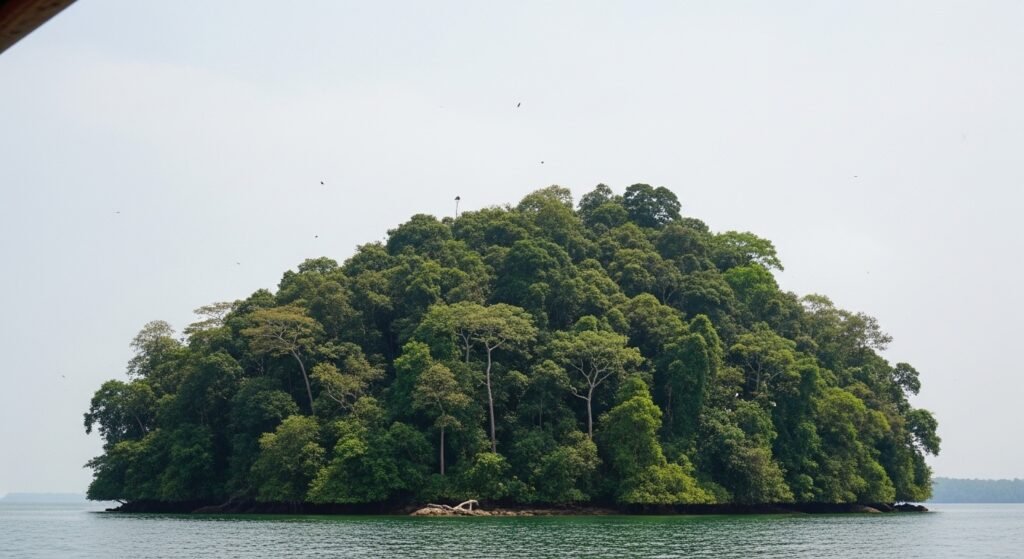
Pathiramanal — “Sands of the Night” in Malayalam — is an uninhabited island on Vembanad Lake, roughly 13 km from Alleppey by water. No one lives on it. Nothing is built on it except a small shelter. What it has, from November to February, is birds: 91 resident species and over 50 migratory species, including Siberian cranes, painted storks, herons, darters, cormorants, and kingfishers in numbers that will stop any birder cold.
The island sits between Thaneermukkom and Kumarakom, surrounded by open lake on all sides, and the forest interior is dense enough that you can walk 10 metres in from the shore and feel genuinely isolated from the water. Outside migratory season, the resident bird population is still substantial; but visiting between November and February significantly raises the count and the spectacle.
To reach Pathiramanal independently, take a public boat from Muhamma jetty — 40 rupees, roughly a 10-minute ride. Alternatively, most houseboat routes on Vembanad Lake pass close to or stop at the island. A private speedboat from Alleppey takes about 30 minutes. There is no entry fee. The island closes to visitors after dark.
Practical tip: The best time to visit Pathiramanal is early morning (before 9 AM) when bird activity peaks. Bring binoculars — the island’s forest paths are walkable but not wide, and the birds are in the canopy rather than on the shore.
Alappuzha Beach and Lighthouse
Alappuzha Beach is the main seafront of the town — a long Arabian Sea shoreline with a beach park, food stalls, and the 137-year-old Alappuzha Pier extending directly into the sea. The pier is one of the most photographed structures in Kerala: a narrow masonry causeway that ends in the open ocean, with waves breaking on both sides. It was built as a commercial harbour pier, and the old cargo warehouses at its base are still visible. At sunset, the pier fills with locals and the light is genuinely extraordinary.
The Alappuzha Lighthouse stands at the beach’s southern end, about 4 km from the town centre — walkable from the pier or a quick autorickshaw ride. Built in 1862 from laterite stone and teak wood, it is one of the oldest active lighthouses on India’s south-west coast. The interior holds a small museum of historical maritime equipment — oil lamps, foghorns, and navigation instruments from the colonial era. Climb the winding staircase to the top for a 360-degree view over the town, the backwaters, and the open sea. The lighthouse is open to visitors on most days; a small entry fee applies.
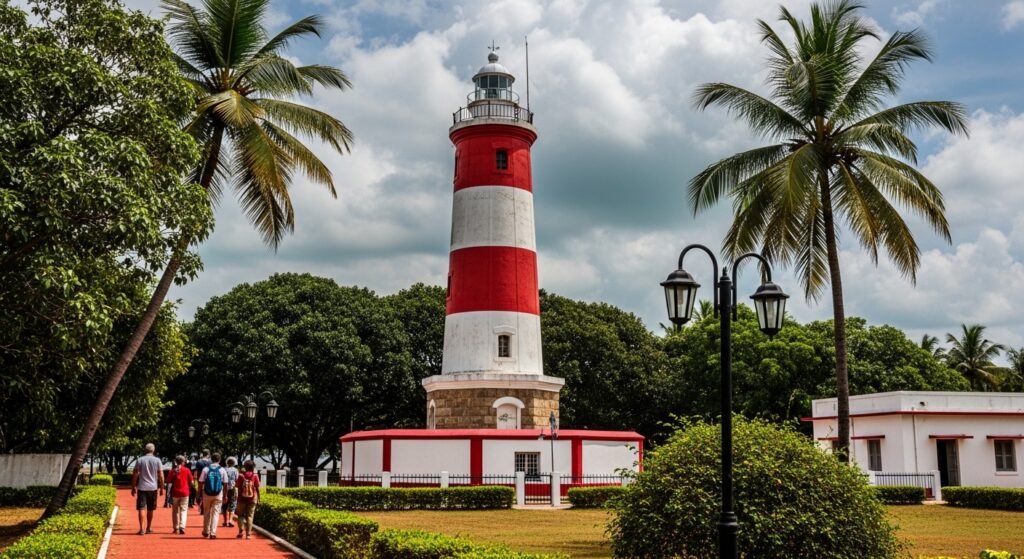
Practical tip: The lighthouse is at its best in the late afternoon — the western light across the beach and the view from the top are significantly better than in the morning. Check opening hours locally before visiting.
Marari Beach
Marari Beach is what Alappuzha Beach is not: quiet, uncrowded, and backed by a working fishing village rather than a promenade. Located 11 km north of Alleppey town near Mararikulam, it is a stretch of pale sand fringed with coconut palms, with fishing boats pulled onto the shore each morning and the village of Mararikulam just behind the treeline. The water is generally calmer here than at Alappuzha Beach, making it better for swimming.
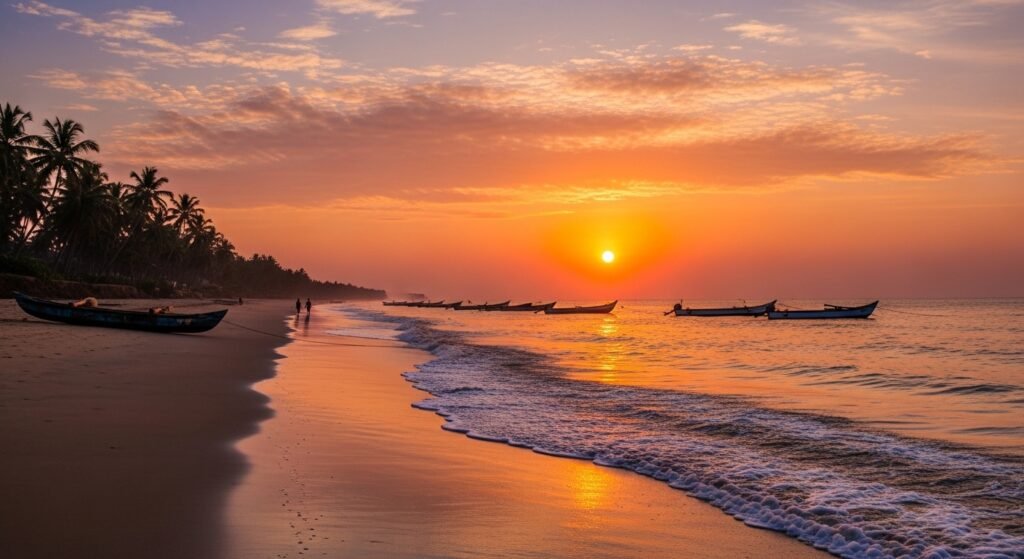
The beach itself is public and free. The world-class Ayurvedic beach resorts that have built up around Marari are optional — several operate spas and treatment centres open to non-guests on a paid basis, and they are among the better Ayurveda options in the district. But Marari Beach is worth visiting on its own terms, without a resort booking, simply for the atmosphere of a beach that has not been built up around tourism.
Thottappally Beach
About 28 km south of Alleppey, Thottappally is where the Alleppey backwaters end and the Arabian Sea begins. The Thottappally kadavu — the spillway where the backwater network connects to the sea — is a rare geographical feature: fresh and salt water meeting at an open shore. The beach sand here is visibly different from the white sand further north, darkened by high concentrations of zirconia and other heavy minerals that give it a black-and-grey character unique in Kerala. It is a good photography location and an interesting stop for those travelling south through Kuttanad.
Krishnapuram Palace
Krishnapuram Palace is worth the 35 km drive south to Kayamkulam for one reason alone: the Gajendra Moksham mural. This is the largest single mural painting in Kerala — a floor-to-ceiling depiction of the Puranic story of Gajendra, the elephant-king, calling out to Vishnu from a crocodile’s grasp and receiving liberation. The detail is extraordinary: the posture of the elephant, the attendant gods arranged in the upper register, the peacocks and jackals at the edges. It was painted in the traditional Kerala style on the inner wall of the palace’s main chamber.
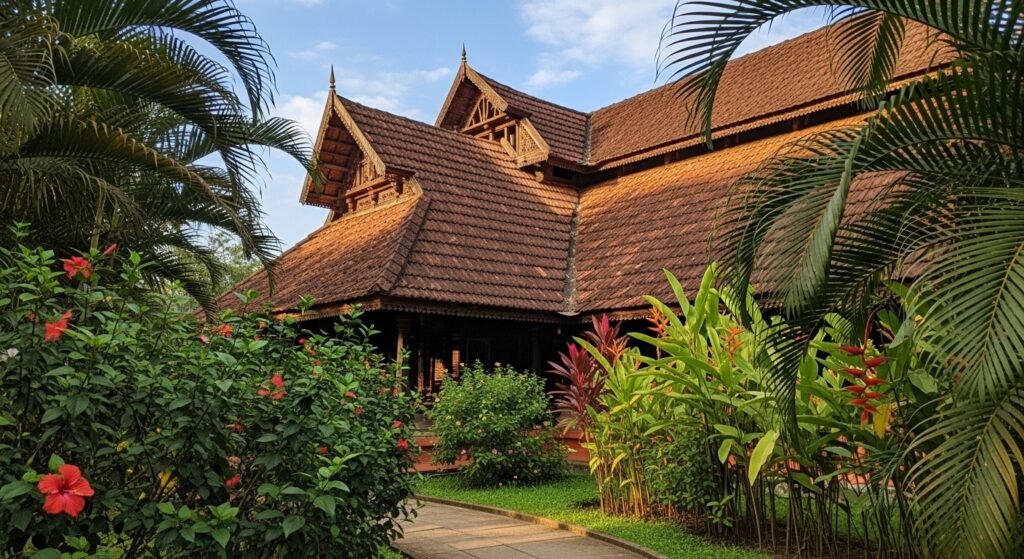
The palace itself was built in the 18th century by the kings of Travancore in the classical Kerala style — gabled roofs with red tiles, narrow corridors, dormer windows, and carved wooden pillars. It has been converted into an archaeological museum administered by the Kerala government, with a collection of bronze sculptures, old coins, Chinese ceramics, and antique household items spread across the palace rooms. Entry fees apply. The palace is typically open daily except Mondays; check current timings before visiting.
Practical tip: Krishnapuram Palace is in Kayamkulam, not in Alleppey town — multiple competitor websites place it in Alleppey, which is misleading. It is best treated as a dedicated half-day excursion south, combined with a coastal drive and a stop at Arthunkal or Ambalapuzha on the return.
Temples, Churches, and Heritage Sites
The Alleppey district holds an unusual concentration of religious sites — Hindu temples with active pilgrimage traditions, some of the oldest Christian churches in India, and one piece of Buddhist heritage that almost no tour itinerary includes. Most of these are within 30 km of Alleppey town and can be combined with each other or with backwater visits.
Ambalapuzha Sri Krishna Temple
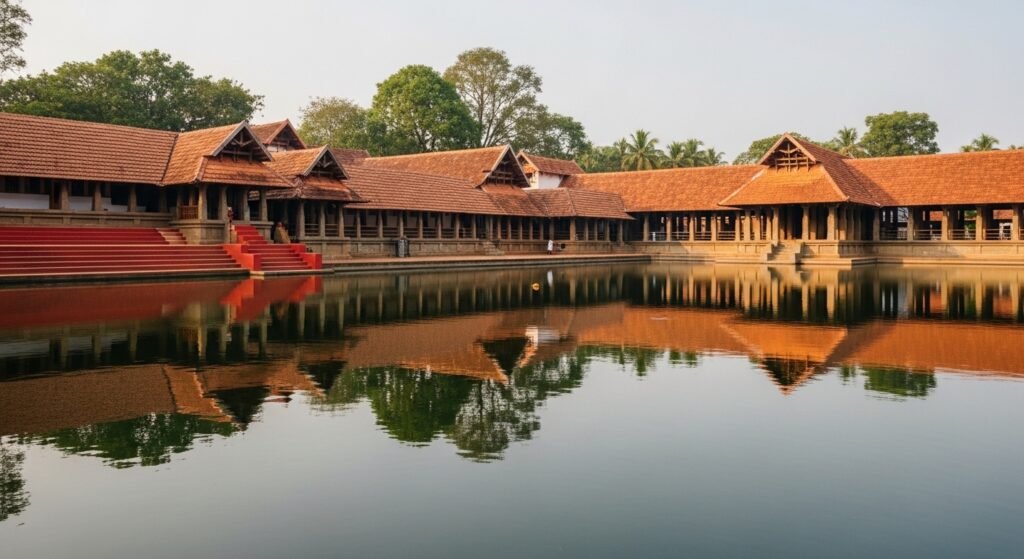
The Ambalapuzha Sri Krishna Temple — also known as the Dwaraka of the South — is one of Kerala’s seven major Vaishnava temples and one of the most visited in the entire district. It stands 14 km south of Alleppey in the town of Ambalapuzha, built in the traditional Kerala style with a copper-roofed sanctum, carved columns, and traditional mural paintings on the inner walls. The temple was constructed between the 15th and 17th centuries by the Chembakassery kings.
The central reason most people visit is the Palpayasam — a sweet rice pudding offered as prasad to every devotee, every day, prepared in the temple kitchen from morning until supplies run out. The Palpayasam of Ambalapuzha is inseparable from its origin story: the Durvasamunikal legend, in which the sage Durvasa challenges the god Krishna to a game of chess, loses, and in his defeat grants the wish that the temple’s prasad will never run out. The story is displayed on painted boards at the temple entrance. Whether or not you visit for worship, the combination of the architecture, the story, and the prasad makes Ambalapuzha a worthwhile stop.
Practical tip: The Palpayasam is distributed in the morning hours — arrive before noon to be sure of receiving it. The temple has specific dress code requirements (traditional Kerala clothing for sanctum entry).
Mannarasala Sree Nagaraja Temple
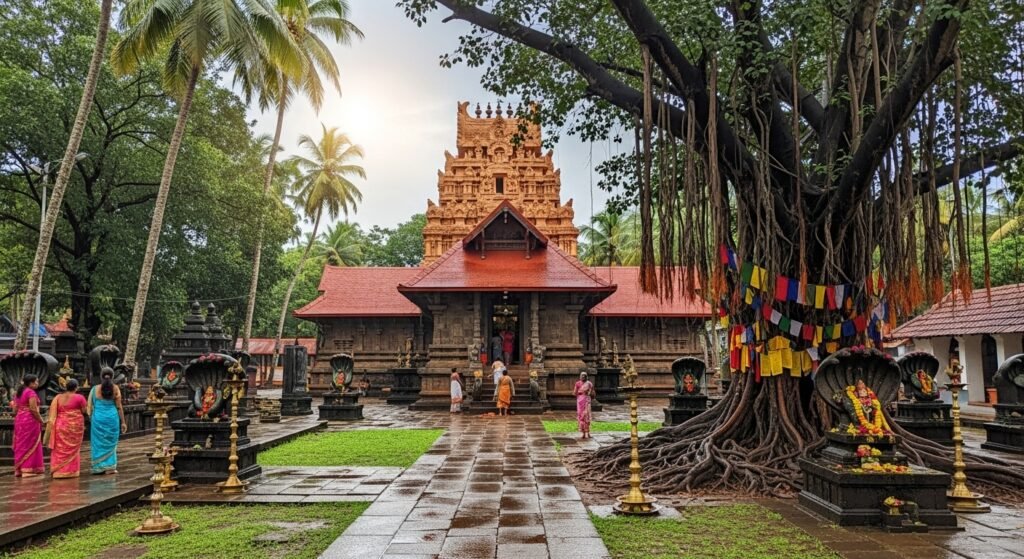
Kerala’s largest snake temple sits inside a forest at Haripad, roughly 32 km from Alleppey. The path to the main shrine is lined on both sides — and in the forest undergrowth around it — with thousands of stone snake idols in every size, placed by devotees over centuries. The forest has been maintained as a protected grove, and the atmosphere on the path to the sanctum is unlike anything else in the region: dark canopy, rustling undergrowth, and the steady accumulation of stone serpents.
The temple is dedicated to Nagaraja, the king of serpents, and attracts devotees primarily seeking blessings for fertility — those who want children come to pray, and those who conceive after visiting return to perform the Noorum Palum ceremony (an offering of milk and paddy). It is an active pilgrimage site, not a heritage monument, and the crowd composition reflects this. Mannarasala is open daily; it is busiest on Sundays and during the Karkidakam festival month.
Arthunkal St. Andrew’s Basilica
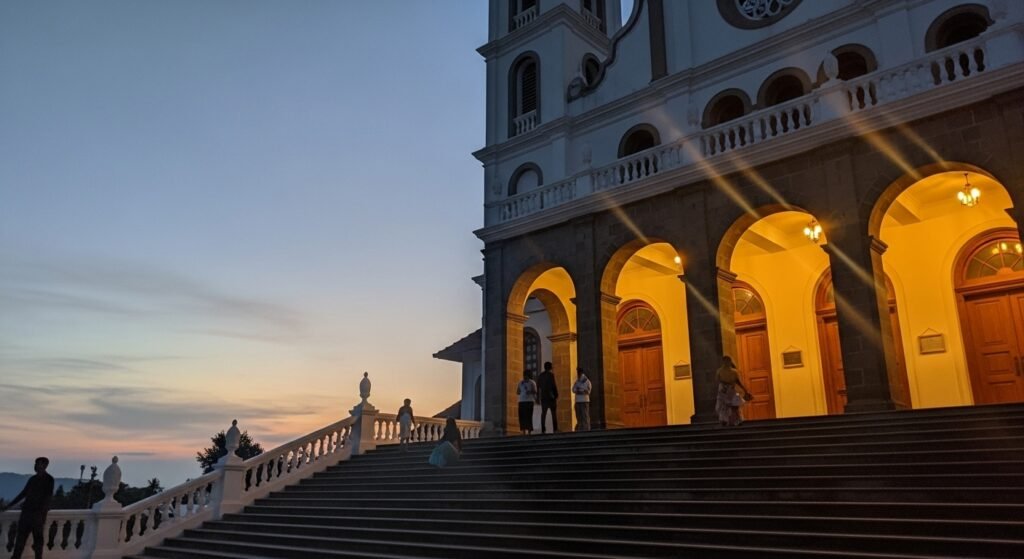
At Arthunkal village on the coast, 23 km north of Alleppey, stands a church that was rebuilt in 1584 by the Portuguese Jesuit priest Fr. Jacomo Fenicio and has been a major pilgrimage centre ever since. The Arthunkal St. Andrew’s Basilica is said to hold the largest shrine to Saint Sebastian in the world, and the annual feast in January — the Arthunkal Perunnal — draws hundreds of thousands of pilgrims from across Kerala and beyond over ten days of prayer, procession, and the iconic sea blessing in which devotees wade into the Arabian Sea.
Outside feast season, the basilica is quieter and the coastal setting — the church sits directly beside the sea, with the sound of waves audible from inside the nave — is worth the trip in its own right. The current structure has been expanded and modified over four centuries but retains its Portuguese heritage in the belfry and the main altar.
Champakulam St. Mary’s Forane Church
In Champakkulam village, 14 km from Alleppey by road or accessible by public boat through the backwaters, stands a church traditionally dated to 427 AD. The Kalloorkadu Marth Maryam Basilica, also called Champakulam St. Mary’s Forane Church, is one of the oldest Syrian Catholic churches in India — established, according to tradition, by St. Thomas the Apostle’s disciple Knai Thoma and his settlers. The current structure is not ancient (it has been rebuilt and expanded over the centuries), but the site itself carries 1,600 years of continuous Christian worship.
The church is modest in appearance compared to its historical weight. It is best visited as part of a Kuttanad excursion — arriving by boat from Alleppey, combining the church with the Champakkulam backwater village and, if timing allows, the oldest snake boat race in Kerala (Champakkulam Vallam Kali, held in late July on the Moolam day of Karkidakam).
Karumadi Kuttan
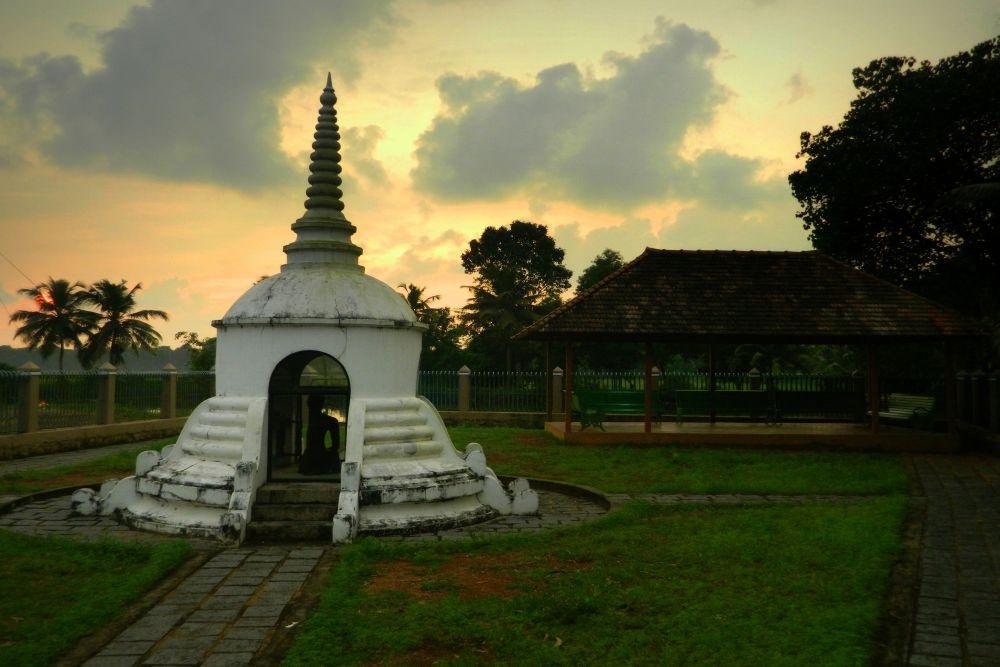
At Ambalapuzha, metres from the Sri Krishna Temple, stands something almost no tourist notices: a weathered black granite statue, headless, seated in the padmasana pose, partially submerged. This is Karumadi Kuttan — “the black stone figure of Karumadi” — a Buddhist statue dating to the 9th or 10th century, a remnant of the period when Buddhism was active in Kerala before Shankaracharya’s Vedic revival. The statue is damaged, possibly deliberately, but its base and lower body remain intact, and a small active shrine has grown around it. It is a five-minute stop combined with the temple visit and one of the most historically distinctive sights in the district.
The Nehru Trophy Boat Race
The Nehru Trophy Boat Race: Alleppey’s Greatest Festival takes place on the second Saturday of August each year, on Punnamada Lake. In 2026, that falls on 8 August. It is the most famous snake boat race in the world — not the oldest, but the largest and most watched — and on race day, Punnamada Lake holds perhaps 150,000 spectators on the banks and in boats, with another crowd watching from grandstands erected along the eastern shore.
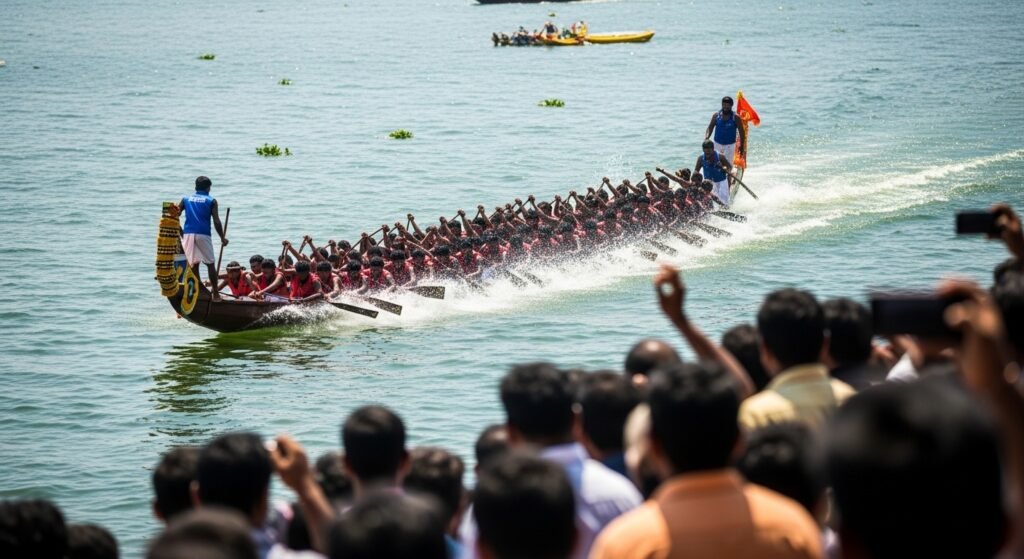
The boats are Chundan Vallams — snake boats, 30 metres or more from prow to stern, with a raised cobra-shaped rear that gives the vessel its name, crewed by 100-plus rowers. As the boats race, the crew rows in rhythmic unison while singing Vanchipattu — the traditional Malayalam boat song — a sound that carries across the water as a low, powerful chant. Races run in heats across the afternoon; the final is the day’s centrepiece. Grandstand tickets are available in advance through the official organisers; roadside viewing along the lake banks is free.
The Nehru Trophy is worth planning a trip around. But if August doesn’t work, consider the Champakkulam Boat Race in late July instead — older, smaller, and held on the Champakkulam backwaters near Kuttanad, where the crowds are a fraction of the size and the atmosphere is closer to a community event than a spectacle.
What to Visit Near Alleppey
Three places within reasonable day-trip distance — Kainakary, Chettikulangara, and Kalavoor — that most Alleppey itineraries miss entirely, each for a different reason.
Kainakary Village
Kainakary is a backwater village roughly 18 km from Alleppey, entirely surrounded by water — accessible by public ferry from Alleppey or by road via a series of bridges. It is the kind of village the standard houseboat route skims past without stopping: narrow lanes, traditional nalukettus (courtyard houses), toddy shops, and a community whose daily logistics still depend on the ferry schedule.
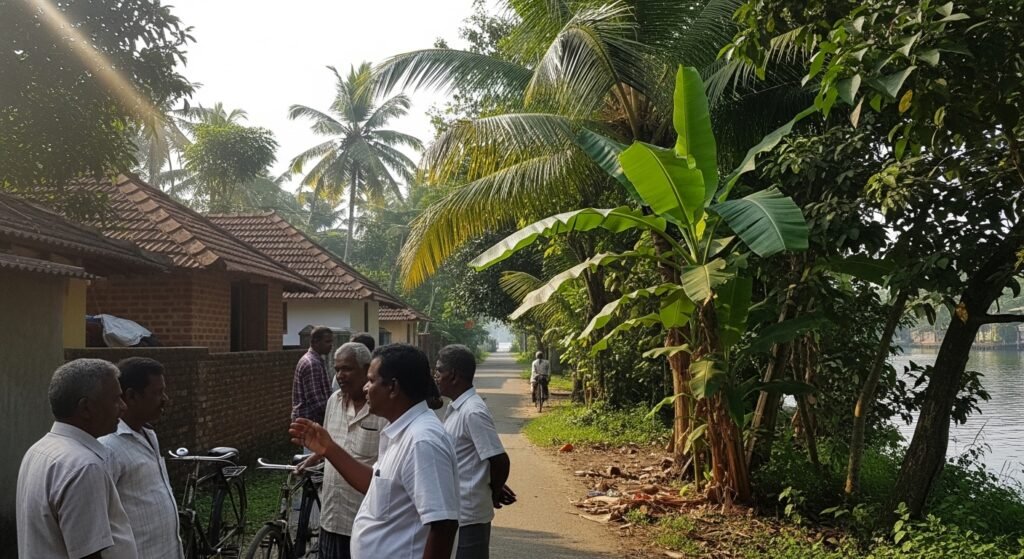
The specific draw for pilgrims is Chavara Bhawan — the ancestral home and chapel of Blessed Kuriakose Elias Chavara, founder of the CMC congregation (Congregation of Mother Carmel) and one of the most important figures in the history of the Syro-Malankara Catholic Church. He was born in Kainakary in 1805; the house and adjoining chapel are maintained as a pilgrimage site. Even for non-pilgrims, Kainakary is one of the most authentic backwater villages accessible without a private boat.
Chettikulangara Devi Temple
The Chettikulangara Devi Temple is 43 km from Alleppey town, in the Chettikulangara village near Mavelikara. It is the most significant temple in the district after Ambalapuzha, dedicated to Bhadrakali (a fierce form of the Goddess), and its annual revenue is second only to Sabarimala among Kerala’s temples. The temple has stood for approximately 1,200 years and draws enormous crowds year-round.
The event worth making the trip for is the Kettukazhcha festival, held annually in the Meenam month (March–April). Enormous decorated effigies — multi-storey structures of rice, coconut, and coloured cloth representing elephants, horses, and mythological figures — are carried through the village in a procession that takes hours to pass. If the dates align with your visit, Chettikulangara during Kettukazhcha is one of the most visually overwhelming festivals in Kerala.
International Coir Museum, Kalavoor
Alleppey built its pre-tourist economy entirely on coir — the fibre spun from coconut husks, used for rope, matting, and brushes. For most of the 20th century, Alappuzha was the largest coir-producing and exporting centre in the world, with the backwater retting pits (where husks were soaked to soften the fibre) defining the smell and rhythm of the town. The International Coir Museum in Kalavoor, near Alleppey, is the only place in India that documents this history in full.
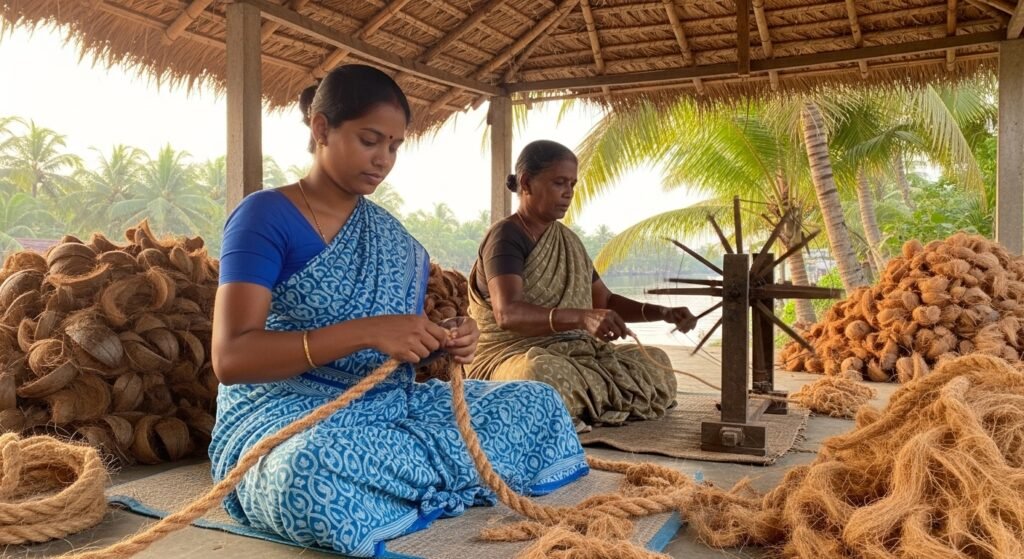
Run by the Coir Board of India, the museum covers the complete production chain — from retting and spinning to weaving, finishing, and export — with original machinery, documentary films, and displays of finished products. It is a small museum but a specific one, and if you spend time in Alleppey and find yourself wondering why the backwaters have that distinctive smell, or why the town’s canal system was built the way it was, this is where the answer lives.
Frequently Asked Questions
What is Alleppey most famous for?
Alleppey is most famous for its backwaters and houseboat cruises on Vembanad and Punnamada lakes — a network of canals, rivers, and lakes navigated by traditional Kettuvallam houseboats. The Nehru Trophy Snake Boat Race, held every August on Punnamada Lake, and Alappuzha Beach with its 137-year-old pier are the other defining landmarks.
How many days do you need in Alleppey?
Two full days is the practical minimum: one day on the backwaters (ideally with an overnight houseboat stay on Vembanad or Punnamada Lake) and one day for the town’s beach, lighthouse, temples, and market. Three days lets you add a day trip to Kuttanad, Champakkulam, or Krishnapuram Palace without rushing. If the Nehru Trophy or a temple festival falls during your visit, build in an extra day around that.
What is the best time to visit Alleppey?
November to February is the best time to visit Alleppey — weather is dry and mild at 23–29°C, migratory birds have arrived at Pathiramanal Island, and the backwaters are clear. August is worth visiting specifically for the Nehru Trophy Boat Race; monsoon makes the backwaters vivid green but also choppier and occasionally restricted for overnight cruises.
Which is the best beach in Alleppey?
For character, facilities, and the lighthouse walk, Alappuzha Beach is the most complete — it is best at sunset, with the pier in the foreground. For peace and natural setting, Marari Beach 11 km north is the better choice. Thottappally Beach, 28 km south, is the most distinctive, with dark mineral-rich sand at the confluence of backwaters and sea.
What can you do in Alleppey besides a houseboat?
More than most people expect. Take a public boat to Pathiramanal Island for birdwatching, walk the Alappuzha pier at sunset, climb the lighthouse, see the Gajendra Moksham mural at Krishnapuram Palace, taste the Palpayasam at Ambalapuzha temple, visit Arthunkal Basilica on the coast, or take a canoe into Kuttanad’s village canals. Alleppey’s appeal extends well beyond the houseboat circuit.
What is the famous food of Alleppey?
Karimeen pollichathu — pearl spot fish wrapped in banana leaf with a paste of shallots, ginger, and red chilli, then grilled over charcoal — is the dish most associated with Alleppey. The karimeen (Etroplus suratensis) is native to the backwaters and tastes different here than anywhere it is farmed elsewhere. Prawn curry cooked in raw coconut milk, crab preparations, and Kerala fish moilee (mild coconut milk curry) are the other staples. The Palpayasam at Ambalapuzha temple — sweet rice pudding offered as temple prasad — is one of Kerala’s most celebrated ritual foods.
When is the Nehru Trophy Boat Race in 2026?
The Nehru Trophy Boat Race is held on the second Saturday of August each year. In 2026, that falls on 8 August, on Punnamada Lake, Alleppey. Grandstand tickets are available in advance through the official Nehru Trophy organisers; viewing from the lake banks and nearby bridges is free.