
Most travellers arrive in Alleppey knowing they want a boat ride on the backwaters. Fewer know which boat to take, where to board, or what they’re actually going to see. The options range from a floating hotel drifting across an open lake to a silent canoe threading through rice paddy canals barely wider than the boat itself — and they deliver completely different experiences at completely different prices.
This guide covers every type of Alappuzha backwater boat ride, what each one costs, where it goes, and which type suits you.
Quick Answer
- There are six backwater boat options in Alleppey: houseboat (Kettuvallam), shikara, village canoe, kayak, government ferry, and shared cruise options for houseboats and shikaras
- Shikaras start from ₹1,000/hr; houseboat day cruises from ₹4,000; village canoes from ₹300/hr; government ferries cost a few rupees
- Allow a minimum of 3 hours to reach Punnamada Lake and some village canals; 5 hours is the recommended duration for a full experience
- The sunrise cruise (6am from Rajiv Jetty, Punnamada) is the best slot — fewer boats on the water, cooler temperatures, calmer light
- Primary boarding points: Rajiv Jetty at Punnamada for private operators; DTPC Boat Jetty for government tourist cruises
The Alleppey Backwaters: What You’re Actually Riding Through
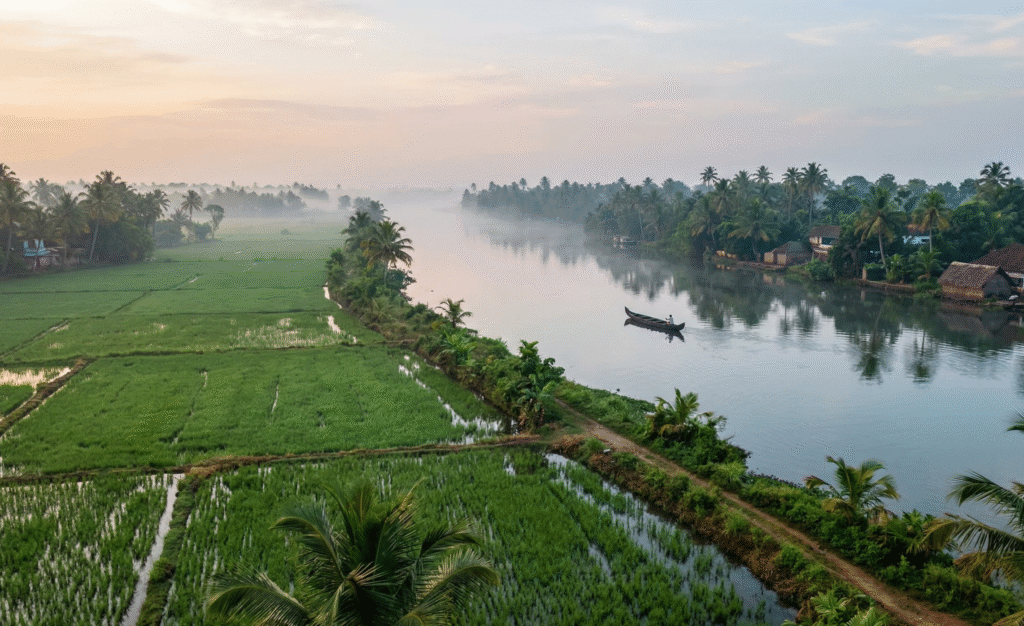
The Alleppey backwaters are a 900-kilometre network of canals, lakes, rivers, and lagoons that run through the Kerala coast, fed by the Arabian Sea to the west. What most travellers see is only a fraction of it — the stretch around Alappuzha town, where Punnamada Lake opens out into the wider Vembanad Lake to the north, and a dense web of interior canals branches south and east into Kuttanad.
Punnamada Lake is the local name for the southern stretch of Vembanad, the largest lake in Kerala at 230 sq km. It’s the primary staging area for most private boat rides — Rajiv Jetty sits on its edge — and it carries a cultural weight that goes beyond scenery. Every second Saturday of August, Punnamada Lake becomes the arena for the Nehru Trophy Boat Race: Kerala’s most celebrated event and one of the most famous boat races in the world. The race was inaugurated in 1952, when Prime Minister Nehru visited Alappuzha and was so captivated by an impromptu race of snake boats on the lake that he broke protocol and rode the winning vessel himself. He later commissioned a silver trophy, and the race has been held every year since. Today it draws around two lakh spectators and is broadcast internationally through the Champions Boat League on Star Sports. The competing Chundan Vallams — traditional snake boats more than 100 feet long, rowed by up to 100 oarsmen — are the longest racing rowing boats in the world; the Vellankulangara snake boat holds the record at 140 feet.
South of the lake, the backwaters give way to Kuttanad — the rice bowl of Kerala and one of the most extraordinary farming landscapes on earth. Rice cultivation here happens 1 to 3 metres below sea level, in paddy fields reclaimed from the water and protected by earthen bunds. The Food and Agriculture Organisation has designated the Kuttanad farming system as a Globally Important Agricultural Heritage System (GIAHS). On a boat ride into the interior canals, you pass directly through this landscape: paddy fields dropping below the waterline, farmers wading knee-deep, duck farms and fish hatcheries operating off the canal banks.
Understanding this geography matters for choosing your boat. The big houseboats and tourist cruises stay on the open water of Vembanad and Punnamada. Smaller boats — shikaras, canoes, kayaks — are what unlock the interior canal network and Kuttanad. The narrower the boat, the deeper you can go.
Types of Alleppey Backwater Boat Rides
Houseboat (Kettuvallam)
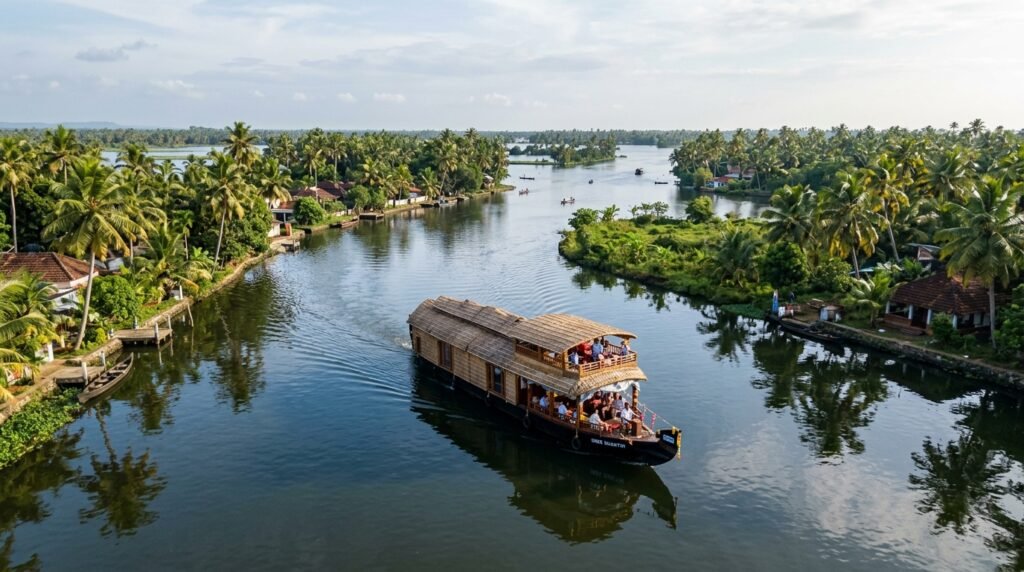
A Kettuvallam is a traditional rice barge converted into a floating guesthouse, and it remains the most iconic way to experience the Alleppey backwaters. The boats are built from bamboo, coconut fibres, and local wood, with distinctive arched thatched roofs. Modern houseboats are fitted with bedrooms, en-suite bathrooms, a kitchen, and a sundeck lounge. An overnight boat comes with a cook on board — meals are prepared fresh from local ingredients and served on the water.
Of roughly 1,200 houseboats operating across Kerala, around 700 are based in Alleppey and Kumarakom. They range from basic budget vessels to multi-bedroom luxury craft with air conditioning and private sun terraces. Day cruise houseboats run from 11am to 5pm; overnight cruises check in at noon and return by 9am the following day.
The key limitation of a houseboat is its size. Kettuvallams are restricted to the main waterways and the open expanse of Vembanad Lake — they cannot access the narrow interior canals where village life is most visible. If seeing Kuttanad up close matters to you, you need a smaller boat.
Shared houseboats: Private charter is the norm, but shared day-cruise houseboats are available — you join a small group of other travellers on a larger vessel for a significantly lower per-person cost. Less private, but a practical option for solo travellers and budget-conscious visitors.
Price: ₹4,000–₹8,000 for a private day cruise; ₹10,000–₹20,000+ for an overnight private charter depending on size and standard. Book through alleppey.life for houseboat options.
Shikara Boat
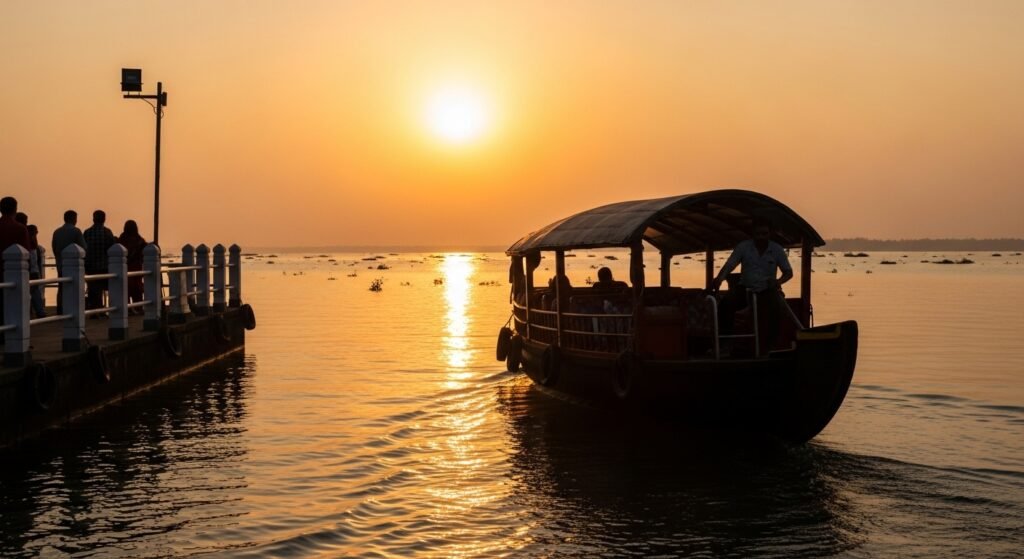
The shikara is the most versatile backwater boat in Alleppey. Originally from Kashmir — where shikaras have worked the waters of Dal Lake in Srinagar for centuries — the design was adapted for Kerala’s narrower canal network. The Kerala shikara is a motorised wooden boat with reclining chairs beneath a thatched canopy, open on all sides to let in the backwater breeze. It seats between 4 and 15 people on standard boats, with larger group vessels seating up to 40.
Unlike a houseboat, a shikara can navigate the narrow village canals as well as the open lake. It’s booked by the hour, which makes it flexible for travellers with different time budgets. Boarding is from Rajiv Jetty at Punnamada Lake — you depart from the same water that hosts the Nehru Trophy, passing the snake boat race starting and finishing points on most itineraries.
Cruise formats from Punnamada Starting Point Jetty:
- Sunrise cruise: 6:00am, 3–4 hours. The best slot — fewest boats on the water, cool air, the light on the canals at dawn is genuinely different
- Day cruise: 8:30am–4:30pm
- Lunch cruise: departs 12:00pm; includes a restaurant stop on the canalside for a Kerala meal
- Sunset cruise: departs 4:30pm, ~2 hours; golden light across Vembanad Lake
- Honeymoon cruise: flower-decorated 2-seat boat, complimentary snacks, flexible timing
- 5-hour Pathiramanal: includes the bird sanctuary island on Vembanad Lake
- Full day (8 hours): deepest itinerary — Kainakary, Chavara Bhavan, Vattakayal, Pallathurthi, Vilakkumaram, narrow canal network, paddy fields below sea level, duck farms, fish hatcheries
Shared vs private: Private shikara is standard and recommended for the experience. Shared shikara options are available for solo travellers or small groups who want to split costs.
Price: ₹1,000/hr weekdays (up to 5 persons, minimum 5 hours recommended); ₹1,500/hr weekends and public holidays. Rates for shorter 2–3 hour rides differ — confirm with your operator.
Take a look at our Alleppey Shikara ride guide for more details.
Village Canoe Tour (Vallam)
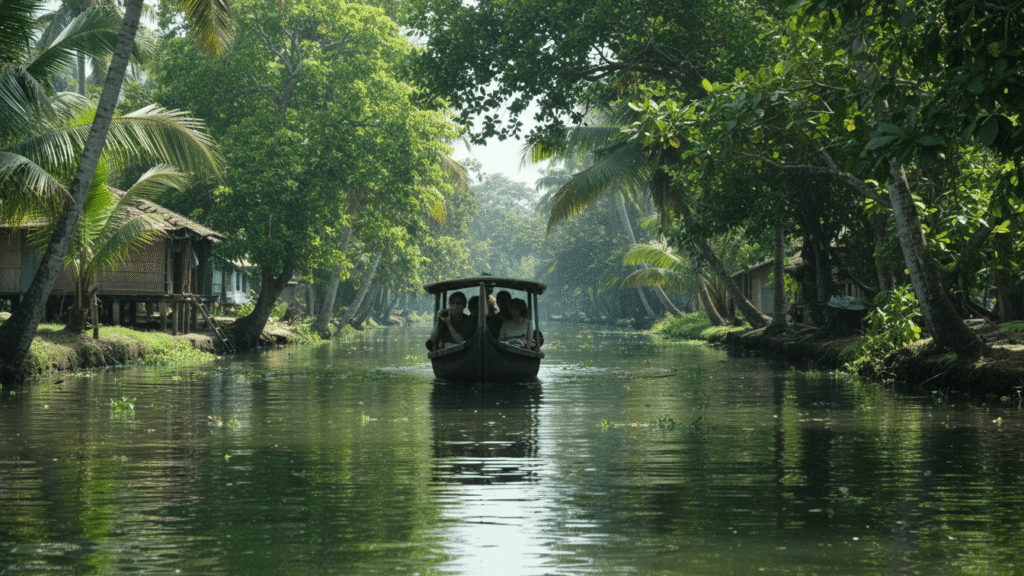
The village canoe is the oldest and most honest way to see the Alleppey backwaters. The vallam — a low wooden country boat — was how backwater communities travelled, traded, and carried goods for centuries. Today it offers the backwater experience that no houseboat or shikara can replicate: you are at water level, moving slowly through canals so narrow that palm fronds brush the sides of the boat, close enough to the banks to watch a family cooking lunch through an open doorway.
Where a shikara moves at engine speed past the interior canals, a canoe takes you into them. You paddle through paddy fields that sit below the surface of the water around you, past fish hatcheries and duck farms, along bunds where children cycle and fishermen cast nets. The silence is its own differentiator — no engine, no exhaust, just the sound of water and birds.
Our village canoeing tour is a guided canoe experience through the Kuttanad canal network that takes you into the interior waterways most tourists never reach. It includes a knowledgeable local guide and a traditional Kerala meal — the kind of banana leaf spread served in a canalside home that you won’t find at a tourist restaurant. For travellers who want to understand what the backwaters actually are, rather than just see them from a distance, this is the most worthwhile option on the water.
Self-hire canoe: ₹1000/hr. Available from 6:00am to 6:30pm.
You can book our secret village canoe tour in Alleppey.
Kayak
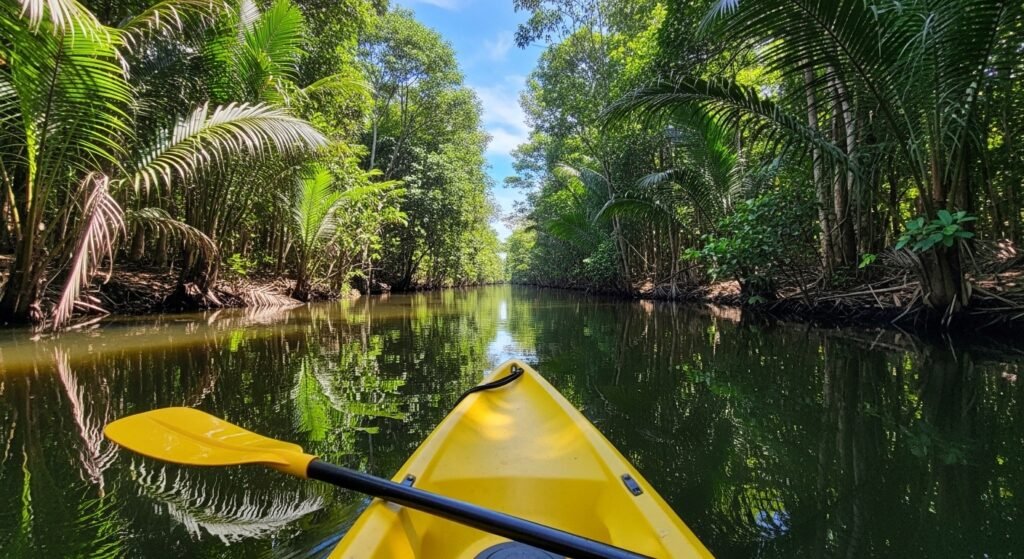
Kayaking is the most active way to explore the Alappuzha backwaters and, alongside canoeing, the most environmentally responsible. A kayak is silent, non-motorised, and can access waterways that defeat every other craft — the absolute narrowest canals, tucked-away lagoons, and channels where a motor would disturb more than it reveals.
Guided kayak tours run at sunrise and sunset to catch the best light, and full-day trips with a lunch stop are available. Nadodi Kayaking offers kayaking tours through the backwaters for those who want a guided experience. Self-hire single and tandem kayaks are available from local operators from around ₹1,000–₹1,500 for four hours.
Kayaking and village canoeing share one quality that separates them from every motorised option: silence. Moving through a lotus-covered canal without engine noise — hearing kingfishers, the lap of water, the distant sounds of village life — is a fundamentally different experience from any boat with a motor.
Government Ferry
The government ferry is how the people who live in the Alleppey backwaters actually travel. It is cheap, unglamorous, and completely authentic.
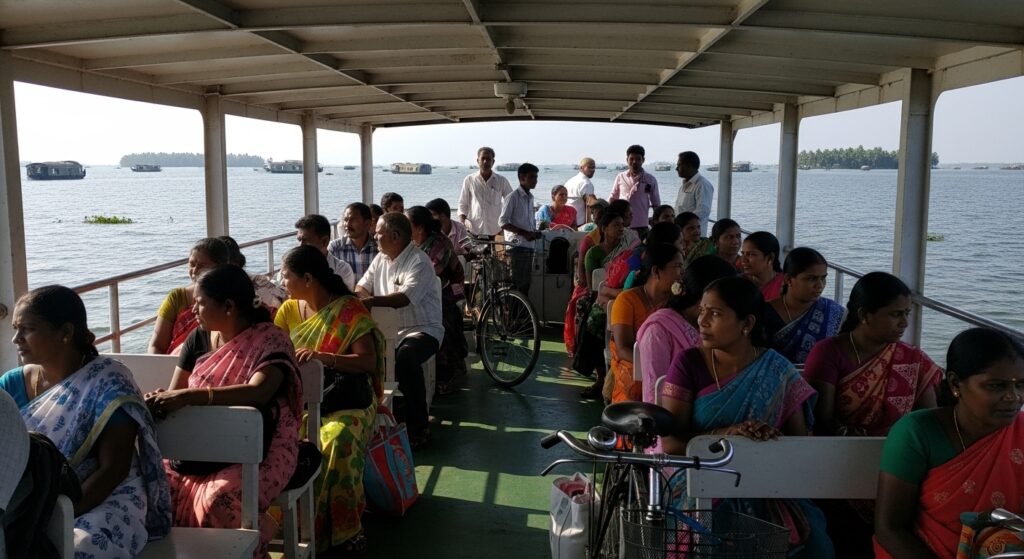
KSRTC water transport runs 54 daily departures from Alappuzha Jetty, starting at 5:30am. The ferries stop at black-and-white striped jetties along the main Alappuzha canal — stops are labelled in Malayalam, but the ferries call at every one regardless. You can hop on and off as you please. Routes reach Nedumudy, Krishnapuram, Kottayam, Kainakary, and deeper into the canal network. Sitting on the local ferry alongside school children, market traders, and commuters, watching the backwaters through an open window for the cost of a few rupees, is an experience that no private tour can replicate.
For those with more time, the government tourist cruise from the DTPC Boat Jetty offers an 8-hour Alappuzha–Kollam service departing at 10:30am. The route covers Karumadikuttan (a famous ancient Buddha statue carved from a meteorite stone), Matha Amrithanandamayi Madom — the ashram of the globally revered spiritual leader known as Amma — Alumkadavu, and Kayamkulam Lake. A 2-hour Alappuzha–Kumarakom–Alappuzha cruise also departs from the DTPC Jetty at 11am.
What You’ll See on an Alleppey Backwater Boat Ride
Every Alleppey backwater boat ride passes through Punnamada Lake and into the canal network — but what you actually see depends entirely on which boat you take and how deep into the waterways it can go. Here is what to expect at each layer.
On Punnamada Lake, most rides begin with open water. The Nehru Trophy snake boat race arena is visible from the lake — the starting and finishing points, the SAI (Sports Authority of India) training facility on the lakeside, and during August, practice sessions of Chundan Vallams slicing across the water with their crews chanting in unison. Even outside race season, the scale of the lake and the sight of traditional wooden craft moving across it is striking.
On the main backwater canals, you pass through a landscape where water is the road. Homes sit directly on the canal edge, with steps leading down to the water instead of a front path. Women wash clothes at the waterline; children use the levee paths as cycling tracks; fishermen stand waist-deep casting nets. Coconut palms lean over the narrower channels and lotus plants cover the surface of the quieter waterways in a shifting green carpet.
In the Kuttanad interior, the canals open into an agricultural landscape unlike anywhere else on earth. The paddy fields here are cultivated below sea level — the water around you sits higher than the land beside it, held back by earthen bunds. Duck farms and fish hatcheries line the canal banks. On a full-day shikara or village canoe tour, you pass through Kainakary, Chavara Bhavan, Vattakayal, Pallathurthi, and Vilakkumaram — named villages and waterway junctions that appear on no tourist map but are the actual living geography of Kuttanad.
For birdwatchers, the backwaters from October to March offer kingfishers, purple herons, cormorants, egrets, and darters on the canals. Pathiramanal Island — accessible on the 5-hour shikara route or a dedicated boat from Muhamma — is the standout destination: a mid-lake island in Vembanad whose name means “Sands of Midnight,” home to around 90 bird species including Pintail Ducks, Common Teal, Night Heron, and Whiskered Tern. No other boat ride in Alleppey puts you this close to migratory birds.
Cultural stops depend on the route. Canalside toddy shops — kallu shapu — are a genuine backwater institution. Toddy is freshly tapped from palm trees: a toddy tapper climbs the palm, makes a cut in the flower, and collects the sap, which ferments naturally within hours to a lightly alcoholic drink (around 4–6% ABV) that is sweet, slightly cloudy, and nothing like as harsh as it sounds. Your boatman can stop at a canalside toddy shop on request. Temples, Catholic churches, and mosques appear along the canal banks throughout most routes — some allow visitors to disembark.
How Long Should Your Alleppey Backwater Boat Ride Be?
The minimum time needed to understand the Alleppey backwaters is 3 hours. That gets you across Punnamada Lake, past the Nehru Trophy arena, and into at least some of the interior canal network. It’s enough for first-timers with a tight schedule.
Five hours is what most travellers need for a complete experience: open lake, village canals, a lunch stop at a canalside restaurant, and — on the 5-hour Pathiramanal shikara — the birdwatching island. This is the recommended duration for a shikara.
A full-day 8-hour ride extends deep into Kuttanad territory. By the time you reach Kainakary on a full-day shikara, you are far from anything that looks like a tourist route — the canals are narrower, quieter, and the villages along them have a different quality of life entirely.
For the overnight houseboat experience, the standard package runs from noon to 9am the following morning. Multi-night routes extend to Kumarakom (1 night), and longer cruises reach Pathiramanal Island, Kumarakom Bird Sanctuary, Ambalapuzha, and Thottappally over 2–4 nights.
Day trip from Kochi: Entirely feasible. An early morning train from Ernakulam reaches Alappuzha in around 1.5 hours. A 5-hour shikara from Rajiv Jetty, a canalside lunch, and a return evening train gives you a full day on the water without an overnight stay.
Best Time for an Alleppey Backwater Boat Ride
November to February is the best window. The weather is dry and cool, boat rides are comfortable from dawn to dusk, and migratory birds are present at Pathiramanal Island from October onwards. This is peak tourist season — prices are higher and popular slots fill up, but the conditions are ideal.
October and March are still good months. Some humidity and the occasional shower are possible, but the backwaters are lush from the retreating monsoon in October, and March is a pleasant transitional month before the heat builds.
Monsoon (June–September) is the most dramatically beautiful time to be on the backwaters. The water levels are high, the paddy fields are a violent green, and the canal banks are overgrown and vivid. Rain is part of the experience rather than a disruption — a shikara or village canoe in light monsoon rain, moving through fog-hung canals, is something that stays with you. The practical trade-off: houseboats anchor by 5:30pm due to water regulations, some routes are restricted, and heavy downpours can appear without warning. Go with the right expectations and monsoon is one of the best times to visit.
April and May should be avoided if possible. The heat is intense, humidity is high, some shallower canals narrow further, and the experience is significantly less comfortable than any other season.
Best time of day: The sunrise cruise at 6am is the standout recommendation. Fewer boats means quieter water, the light on the canals at dawn is softer and more photogenic, and the temperature is cool before the day builds. The sunset cruise at 4:30pm is the second-best option — the golden light across the open water of Vembanad Lake as the sun drops behind the palms is one of the better views in Kerala.
Where to Board Your Alleppey Backwater Boat Ride
There are three main boarding points in Alappuzha and each serves a different type of boat ride. Private shikaras and houseboats depart from Rajiv Jetty at Punnamada; government tourist cruises leave from the DTPC Boat Jetty; and KSRTC public ferries run from Alappuzha main Jetty. Knowing which is which before you arrive saves confusion.
Rajiv Jetty (Punnamada) is the main boarding point for private shikara operators and most houseboat companies. It sits directly on Punnamada Lake at the heart of Alleppey’s backwater tourism. This is where you go for a private or shared shikara, honeymoon cruise, sunrise cruise, or to board a pre-booked houseboat. Most operators in town will arrange an auto-rickshaw pick-up from your accommodation for no extra charge.
DTPC Boat Jetty handles government-run tourist cruises. The 8-hour Alappuzha–Kollam service departs here at 10:30am. The 2-hour Alappuzha–Kumarakom–Alappuzha cruise also leaves from this jetty at 11am. Both are low-cost options run by the District Tourism Promotion Council.
Alappuzha (main) Jetty is the departure point for KSRTC public ferry services — 54 departures from 5:30am across routes to Nedumudy, Krishnapuram, Kottayam, Kainakary, and beyond.
Muhamma is used for access to Pathiramanal Island by those not joining a dedicated shikara tour from Rajiv Jetty.
All jetties are reachable by auto-rickshaw from central Alleppey. The main accommodation cluster around Alleppey Beach and the central canals is 5–10 minutes from Rajiv Jetty.
Which Alleppey Backwater Boat Is Right for You?
| Houseboat | Shikara | Village Canoe | Kayak | Govt. Ferry | |
|---|---|---|---|---|---|
| Price | ₹4,000–₹20,000+ | ₹1,000/hr | ₹1000/hr self / guided tour | ₹1,000–₹1,500 (3hrs) | A few rupees |
| Duration | 5hrs–overnight | 2–8hrs | Flexible | 2hrs–full day | Varies by route |
| Narrow canal access | ✗ | ✓ | ✓✓ deepest | ✓✓ deepest | ✗ |
| Meals included | Often (overnight) | Lunch cruise option | Guided tour includes Kerala meal | No | No |
| Shared option | ✓ | ✓ | Guided groups | No | Yes |
| Best for | Comfort / overnight | Flexibility / value | Most authentic village experience | Active / eco / photography | Local / budget |
The choice comes down to what you’re here for. If you want comfort and a full day or night on the water without planning logistics, a private houseboat delivers that. If you want flexibility, canal access, and a good price, a private or shared shikara from Rajiv Jetty is the most balanced option. If you want to understand what the backwaters actually are — the agriculture, the village life, the silence of the interior canals — the village canoe tour is the one that comes closest.
By traveller type:
Couples and honeymooners do best on a flower-decorated shikara honeymoon cruise or an overnight Kettuvallam. Families with children are well suited to a private shikara (larger boats seat up to 40); a shared houseboat day cruise is the budget family option. Solo travellers and backpackers get the most out of a shared shikara or shared houseboat, or the government ferry for pure authenticity at near-zero cost. Those wanting the deepest experience of Kuttanad village life should book the alleppey.life village canoeing tour at alleppey.life/things-to-do/village-canoeing/. Active and eco-minded travellers belong on a kayak — the backwaters in silence, under your own power, are a different place entirely.
Practical Tips for Your Alleppey Backwater Boat Ride
Book popular slots in advance during peak season (November–January). Sunrise and sunset shikara cruises fill quickly. Walk-in booking is still possible off-peak and at the jetty for same-day rides, but if you have a preferred time, confirm with your operator the day before.
Bargaining is normal at the jetty. For on-the-spot bookings with independent operators at Rajiv Jetty, having a price in mind before you approach helps. Rates are broadly standardised but there is room to negotiate, particularly for longer rides or off-peak slots.
Carry cash. Most boat operators don’t accept cards. ATMs are available in central Alleppey town — draw cash before heading to the jetty.
What to bring: Sunscreen, a hat, and light layers. The canals are shaded for much of their length, but the open lake in the middle of the day can be exposed. A light layer for early morning and evening is useful — the backwater breeze is cooler than you expect. The canals are calm; motion sickness is not a concern.
Footwear: Wear sandals or shoes you can remove easily. Boarding smaller boats involves stepping onto low jetties and sometimes across wet surfaces.
Food on the water: Shikara operators don’t include meals unless you book a lunch cruise. A stop at a canalside restaurant for a Kerala rice meal on a banana leaf is worth planning into a 5-hour ride. The village canoeing tour includes a meal as part of the experience.
Safety: Life jackets should be standard practice with any legitimate operator. Confirm this before boarding. The backwaters are calm, but the precaution is worth taking, particularly with children.
Frequently Asked Questions
What is the best type of boat ride in the Alleppey backwaters?
For most travellers, the shikara offers the best combination of access, flexibility, and value — it reaches both the open water of Punnamada Lake and the narrow village canals that houseboats cannot enter, and it’s bookable by the hour from ₹1,000. For the deepest cultural experience, the village canoe tour goes further into the interior Kuttanad canals than any motorised boat. For a full overnight experience with meals and comfort on board, a private houseboat (Kettuvallam) is the premium choice.
How much does an Alleppey backwater boat ride cost?
Shikara rides start from ₹1,000/hr weekdays (up to 5 people; ₹1,500/hr weekends and holidays). Village canoes are ₹300/hr for self-hire. Houseboat day cruises start from around ₹4,000 for a private boat; overnight packages run ₹10,000–₹20,000+ depending on size and standard. Shared houseboat day cruises are available at a lower per-person rate. Government ferry journeys cost a few rupees.
How long should I spend on a backwater boat ride in Alleppey?
Three hours is the minimum to see Punnamada Lake and some village canal life. Five hours is the recommended duration — it covers the open lake, interior canals, a canalside lunch stop, and the Pathiramanal Island option. A full-day 8-hour ride takes you deep into Kuttanad territory with named village stops at Kainakary, Vattakayal, and Vilakkumaram.
What is the best time of year for an Alleppey backwater boat ride?
November through February is the best overall window — dry, cool, and prime season for migratory birds at Pathiramanal Island. Monsoon (June–September) is a rewarding alternative for those who don’t mind rain: the backwaters are dramatically lush and green, and tourist crowds thin out. Avoid April–May; the heat makes the experience uncomfortable and some shallower canals narrow.
Where do you board a backwater boat in Alleppey?
Private shikara and houseboat operators board from Rajiv Jetty at Punnamada Lake. Government tourist cruises — including the 8-hour Alappuzha–Kollam service and the 2-hour Kumarakom cruise — depart from the DTPC Boat Jetty. KSRTC public ferries leave from Alappuzha main Jetty, with 54 daily departures from 5:30am. Most private operators offer an auto-rickshaw pick-up from your guesthouse.
Is an Alleppey backwater boat ride worth doing during monsoon?
Yes. The monsoon backwaters — high water, vivid green paddy fields, light rain on a thatched canopy — are one of the most evocative experiences in Kerala. The trade-off is unpredictable heavy downpours and houseboats docking earlier (5:30pm). A shikara or village canoe in light monsoon rain is genuinely memorable. Avoid the monsoon only if you truly cannot tolerate getting wet.
What is the difference between a houseboat and a shikara in Alleppey?
A houseboat (Kettuvallam) is a converted rice barge fitted with bedrooms, a kitchen, a bathroom, and a sundeck — a floating hotel that cruises the open lake and main waterways. A shikara is a smaller motorised wooden boat with reclining seats and a canopy that can access the narrow village canals a houseboat cannot reach. Houseboats are booked for a full day or overnight; shikaras are booked by the hour.
Is Pathiramanal Island worth including on a backwater boat ride?
Yes, if you have at least 5 hours. Pathiramanal — “Sands of Midnight” in Malayalam — sits in Vembanad Lake about 1.5 hours from Alleppey by motorboat and is only reachable by water. The island is home to around 90 bird species, including Pintail Ducks, Night Herons, Whiskered Terns, and Stork-billed Kingfishers. It is the best birdwatching site accessible from Alleppey, and migratory species arrive from October through March. The 5-hour Pathiramanal shikara package from Rajiv Jetty includes the island as the centrepiece stop.
What is the Nehru Trophy Boat Race and can I see it from the backwaters?
The Nehru Trophy Boat Race is Kerala’s most famous sporting event and one of the most celebrated boat races in the world. It takes place on Punnamada Lake every second Saturday of August, drawing around two lakh spectators including large numbers of international visitors. The race was inaugurated in 1952 when Prime Minister Nehru visited Alappuzha, was captivated by a spontaneous snake boat race on the lake, and rode the winning Chundan Vallam himself. The competing snake boats are over 100 feet long and rowed by up to 100 oarsmen; the event is now broadcast on Star Sports through the Champions Boat League. The starting and finishing points on Punnamada Lake sit directly on the route taken by most shikara and houseboat rides from Rajiv Jetty — and outside race season, practice sessions and snake boat models are often visible on the lake.
What is village canoeing in Alleppey and is it worth doing?
Village canoeing is a guided canoe experience through the interior Kuttanad canal network — the narrow waterways that no houseboat or shikara reaches. You paddle at water level through rice fields cultivated below sea level, past duck farms, fish hatcheries, and homes whose front steps lead directly to the canal. The experience is slow, silent, and close — a fundamentally different relationship with the backwaters than any motorised ride offers. The alleppey.life village canoeing tour includes a local guide and a traditional Kerala meal as part of the experience, and is one of the most genuine ways to spend a day on the water in Alappuzha. Book at alleppey.life/things-to-do/village-canoeing/.
The Alleppey backwaters reward the traveller who chooses their boat with intention rather than defaulting to the most obvious option. The houseboat is iconic for a reason — but it stays on the main lake. The shikara reaches the canals. The village canoe goes deepest of all. Whatever you choose, the water is there: 900 kilometres of it, running through one of the most distinctive landscapes in India.